The Future of Marketing Is Human
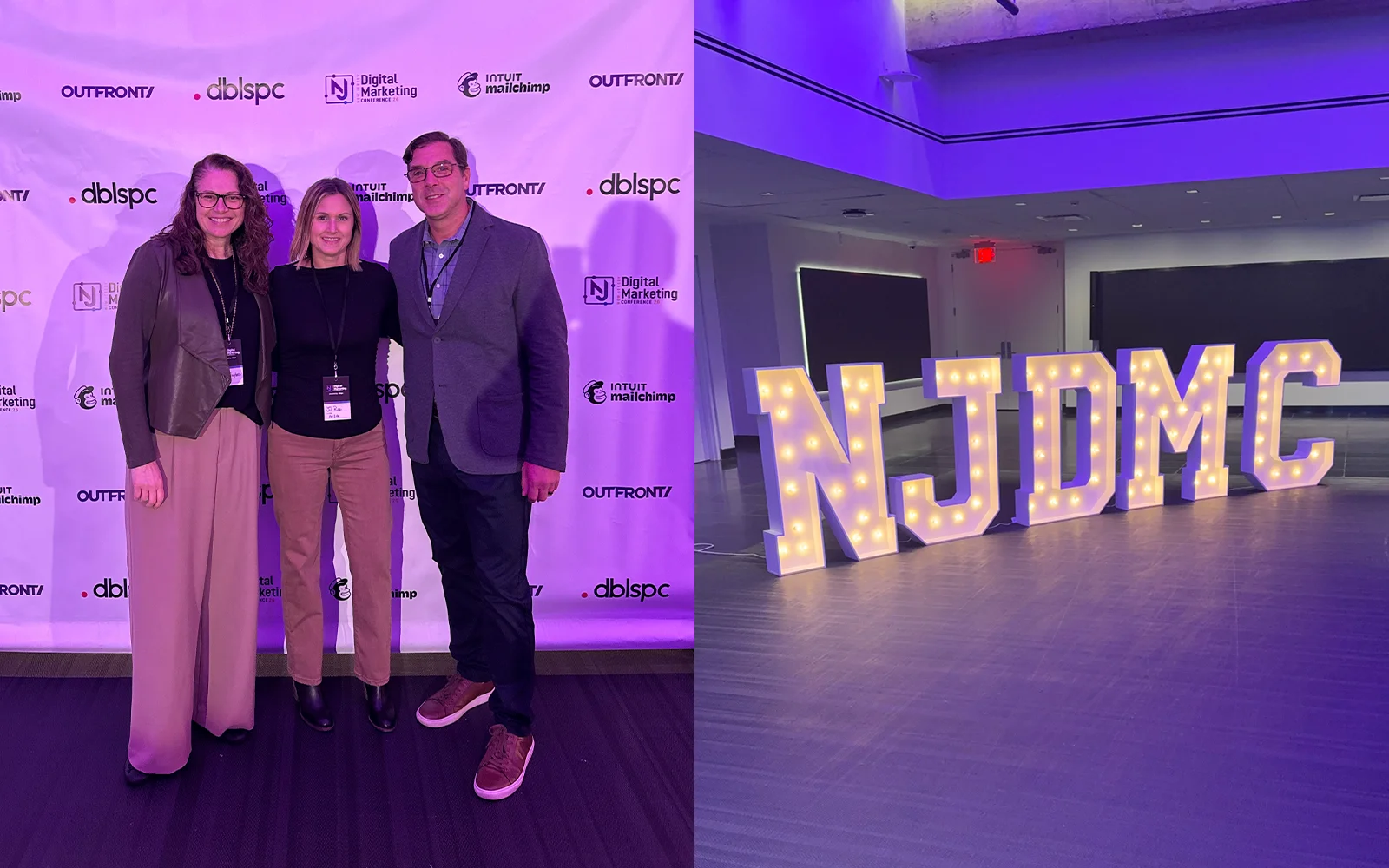
This month, the Rizco team joined marketers, strategists, and creative leaders at the 2026 New Jersey Digital Marketing Conference (NJDMC) hosted by dblspc at Bell Works. This year’s theme, Connected Experiences, explored the evolving relationship between marketing, technology, and people and how these three forces intersect to shape the future of marketing.
Across sessions on agentic AI, brand engagement, influencer marketing, and measurement, one theme stood out: AI is accelerating how we work, but human insight, authentic relationships, and meaningful measurement remain at the heart of effective marketing, turning those capabilities into meaningful results.
Here are the takeaways we’re bringing back to our work.
AI Can Accelerate the Work. Human Judgment Makes It Matter.
In Agentic AI, Explained: How Machines Went From Answering to Acting, Dan Van Tran, CTO of Collectors, explored how AI is evolving from a tool that responds to prompts into an agent that can pursue a goal.
Agentic AI should follow a process of goal, plan, act, check, and iterate, using tools and refining its work with human direction. Think of agents as junior team members: they can take on tasks, but they still need guidance and oversight. Agents should amplify human judgment, not replace it.
The data reinforces this point. 93% of marketers use AI to create content, yet only 3% trust it without review, and 89% manually check its output.1 AI Adoption is widespread, but human expertise remains essential to ensuring quality. Putting agentic AI to work effectively means:
- Start small. Test internally, establish what works, and expand gradually.
- Set clear boundaries. Define the goal, limitations, and where human approval is required.
- Keep humans accountable. Check, evaluate, and refine the output before it moves forward.
The same balance applies to search. As more people turn to AI-powered tools to research options, compare solutions, and make decisions, more of the customer journey is happening inside conversations that marketers can’t easily see or measure. But SEO isn’t dead. Organic search still drives more traffic than all tracked AI platforms combined. For marketers, the opportunity is to create useful, credible content that performs in traditional search while keeping brands visible and relevant as AI reshapes how people discover information.
Attention Is Earned Through Relationships, Not Just Reach.
During a panel discussion, Building the Connection: How Brands and Media Earn Attention, Eric Farkas of Pinterest, Kelsey White of GNW Consulting, Karen Kehm of QYOU Media, and Eva Press of 37Arc explored how brands can build meaningful connections in an increasingly fragmented media landscape.
Being visible isn’t the same as being relevant. Brands need to understand where their audiences spend time, what they value, and which interactions build trust.
That means living up to the brand promise at every touchpoint, looking beyond impressions to meaningful engagement, and connecting digital experiences with real-world relationships. In a crowded, increasingly automated landscape, authenticity stands out. Behind-the-scenes content, live experiences, and genuine interactions help audiences connect with the people behind a brand, building the trust and credibility that polished messaging alone can’t deliver.
For B2B organizations, alignment between sales and marketing matters just as much. Understanding why clients choose you, communicating your strengths, and delivering a consistent experience helps turn initial interest into lasting relationships. Ultimately, building meaningful connections requires looking beyond the first click or interaction to consider every touchpoint that shapes the audience’s experience with your brand.
Influence Is About Credibility, Not Follower Count.
The Inside Influence session, featuring Olivia Geiger of LinkedIn, Monica Joy of Monica Violet Joy Productions, and Kellie Matzen of Influencer, highlighted the value of employee thought leadership and authentic creator voices.
Employee-generated thought leadership can drive strong engagement, reinforcing the value of giving employees room to share meaningful perspectives in their own voices. For B2B brands, this also means understanding who influences purchasing decisions, prioritizing engaged audiences over sheer reach, and measuring impact against clear business goals.
Ultimately, influence isn’t limited to people with large followings. It’s about building credibility, sharing expertise, and earning the trust that makes people pay attention.
AI Adoption Needs to Be Measured Like Any Other Investment.
In Measuring AI ROI and Turning Adoption into Business Outcomes, Denis Scott, Chief Marketing Officer of Larridin, challenged marketers to look beyond AI adoption and evaluate its actual business impact.
Organizations are adopting AI rapidly, often under pressure to keep pace with evolving technology, but many lack a clear picture of their total investment and its impact. Without a coordinated strategy, teams may accumulate overlapping subscriptions, continue paying for underused tools, or duplicate capabilities across departments. Simply adopting AI isn’t a measure of success. Marketers need to understand which tools they’re using, what challenges they address, how resources are allocated, and whether those investments deliver measurable improvements in efficiency, work quality, and business results.
Just as importantly, teams need to recognize where human expertise remains essential. Faster production doesn’t automatically mean better work. Treating AI as a strategic investment, not just a productivity tool, helps organizations make informed decisions about where to invest, what to refine, and how to demonstrate value.
Bringing Technology and Human Insight Together
The conversations at NJDMC reinforced that the future of marketing depends on combining technological capabilities with human judgment.
As AI changes how people discover information, brands will need to create content that is clear, credible, and genuinely useful. As measurement evolves, marketers will need to look beyond isolated channel metrics to understand engagement quality, customer journeys, and business outcomes.
At Rizco, we see technology and human creativity as complementary forces. AI can accelerate our work, surface insights, and open new possibilities. Strategy, creativity, and human judgment ensure those capabilities serve a larger purpose. As NJDMC host and Associate Professor of Professional Practice, Communication at Rutgers University School of Communication, Mark Beal emphasized, marketing ultimately comes down to humans connecting with humans. The tools may change, but that purpose doesn’t.
Want to put strategy, creativity, and emerging technology to work for your brand?