Every organization has a brand. The question is: Is it working for you or against you?
Whether you are trying to attract customers, recruit top talent, command premium pricing, or prepare your business for succession, your brand influences decisions long before someone signs a contract.
However, many organizations still view branding as a marketing expense rather than one of their most valuable business assets.
At Rizco, we see it differently.
A brand is more than a logo. It is what people remember about your organization and what they say about it when you’re no longer in the room.
It is the sum of the perceptions, experiences, and promises that shape how people view your organization. When built strategically, it becomes a business asset that drives measurable outcomes across the entire organization.
Research consistently shows that organizations with clear positioning and consistent brand experiences outperform those that treat branding as a visual exercise alone.
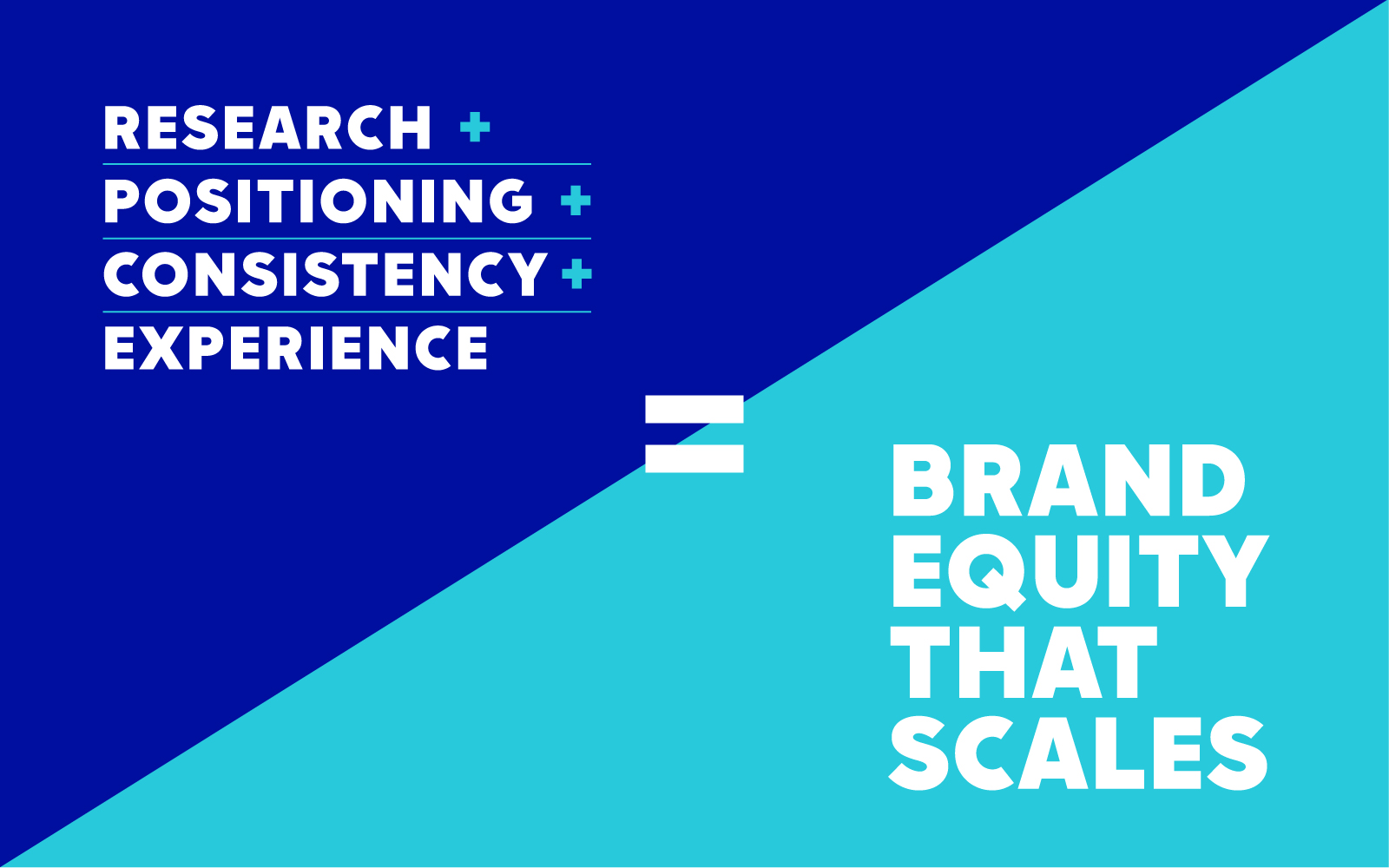
A strong brand is built through research, strategic positioning, consistent execution, and meaningful experiences that shape perception over time and create lasting business value.
Branding isn’t about creating something that simply looks better. It’s about creating something that performs better.
The Hidden Asset Driving Business Performance
Unlike equipment, technology, or real estate, your brand does not appear as an asset on your balance sheet. Accounting standards typically classify investments in branding as operating expenses.
The marketplace, however, values brands very differently.
Every interaction with customers, prospects, employees, partners, and investors either builds confidence or creates uncertainty. Over time, those interactions shape your reputation—one of your organization’s most valuable business assets.
A research-driven brand transforms organizational knowledge and reputation into an asset that scales beyond any one individual. Rather than relying on founders or key rainmakers, it creates consistent experiences that strengthen the business itself.
Consistency Is Where Enterprise Value Is Created
A brand is not built through creativity alone. It is built through research, strategy, consistency, and every experience that follows.
Branding is not a campaign. It is the discipline of delivering the same promise across every interaction, from your website, proposals, sales conversations, leadership, customer service, hiring process, and client experience.
Consistency reduces uncertainty, making organizations easier to trust.
In fact, organizations with consistent branding report revenue increases of 10–20%1, demonstrating that consistency is more than a marketing best practice. It is a measurable driver of business growth.
Customers don’t buy because your message is louder. They buy because your message is consistently reinforced through every touchpoint.
Why Research Matters
Many organizations begin branding with design.
Research-driven organizations begin with questions.
- How are we perceived in the marketplace?
- Why do customers choose us?
- Where are we losing opportunities?
- How do employees describe our value?
- How does our positioning compare with competitors?
Without research, branding becomes subjective.
With research, branding becomes a strategic business decision grounded in customer insight, competitive intelligence, and organizational alignment.
That clarity becomes the foundation for trust, supporting long-term enterprise value.
Trust Creates Pricing Power
When buyers clearly understand why your organization is different, they become less focused on comparing prices.
Instead, they compare expertise, outcomes, confidence, and long-term value.
Research shows that organizations with strong brands enjoy approximately 30% greater pricing power because customers are less sensitive to price when they trust the value being delivered.2
Strong brands don’t compete on price.
They compete on confidence.
Trust Accelerates Growth
Trust is one of the few competitive advantages that compounds over time.
Organizations that consistently deliver on their promise experience 5–25% stronger customer acquisition performance while achieving approximately 60% higher customer retention because trust reduces purchase friction and strengthens long-term loyalty.3
Likewise, the 2025 Edelman Trust Barometer found that approximately 80% of consumers say trust influences the brands they choose, reinforcing that reputation has become one of today’s most valuable business assets.
Trust is not simply an emotional benefit.
It is an economic advantage.
When Branding Becomes Enterprise Strategy
Many organizations believe they have a sales problem.
Others assume they have a marketing problem.
More often, they have a positioning problem.
When your value proposition lacks clarity, customers compare you on price instead of expertise. Sales teams tell different stories. Marketing struggles to communicate meaningful differentiation. Recruiting becomes more difficult. Cross-selling opportunities are missed. Customer relationships remain tied to individuals rather than the organization.
These challenges are rarely solved by increasing advertising or redesigning a website.
They are solved by aligning the organization around a clear, research-driven brand strategy.
Enterprise Value Is Built Long Before a Transaction
Whether you are preparing for succession, pursuing growth, attracting investors, or positioning your company for acquisition, your brand plays a significant role in how your organization is valued.
Sophisticated buyers do not simply evaluate revenue.
They evaluate durability.
- Can the business continue growing without its founder?
- Does trust belong to individual employees or to the organization?
- Can customer relationships transfer to the next generation of leadership?
- Is growth driven by systems, consistency, and culture rather than personalities?
Organizations with research-driven brands answer these questions with confidence because their value is embedded throughout the organization, not concentrated in a handful of individuals.
Is It Time for a Brand Value Audit?
A Brand Value Audit is a strategic assessment of how your organization is perceived internally and externally, and whether that perception accurately reflects the value you deliver.
Ask yourself:
- If our logo disappeared tomorrow, would customers still know why they
chose us? - Can every member of our leadership team explain what makes us different
in the same way? - Are customers buying our expertise or simply comparing us on price?
- Is our organization’s value tied to a few key people, or is it embedded
throughout the business? - If our founder or top performers left tomorrow, would customers stay?
If three or more of these questions give you pause, your brand may be limiting your organization’s growth and long-term enterprise value.
As Keith Rizzi, Partner and Creative Director at Rizco, puts it:
“Design doesn’t create trust. Consistency does. Design is simply one of the ways we express that consistency. When every interaction reinforces the same promise, customers stop questioning your value and start believing in it. That’s when a brand becomes one of a company’s greatest business assets.”
Branding Is an Investment in Enterprise Value
The organizations that will thrive over the next decade will not necessarily be the biggest, the oldest, or the loudest.
They will be the ones that are the most understood.
They will be the organizations whose value is not confined to a founder, a salesperson, or a single department, but embedded throughout the entire business.
A research-driven brand creates that kind of organization. It aligns leadership, inspires employees, builds customer confidence, and transforms reputation into measurable enterprise value.
Branding isn’t simply about being recognized.
It’s about being remembered, trusted, and ultimately valued.
See how Rizco helps organizations turn research strategy, and design into brands that drive growth.
1 Marq (formerly Lucidpress). The Impact of Brand Consistency Report. 2025.
2 McKinsey & Company. The Value of Brand. 2024.
3 McKinsey & Company. The State of Marketing and Brand Growth. 2026.